Three Centuries of Construction for a Masterpiece
The Cathedrale Sainte-Marie of Bayonne is a jewel of Gothic architecture whose construction spanned three centuries, from the 13th to the 16th. Listed as a UNESCO World Heritage Site as part of the Routes of Santiago de Compostela, it is one of the most beautiful religious buildings in southwestern France. Yet it remains surprisingly little-known, eclipsed by the great cathedrals of the north. That is precisely part of its charm: you can admire architectural wonders here in a tranquility that Notre-Dame de Paris has not enjoyed for a long time.
The Cloister: One of the Finest in France
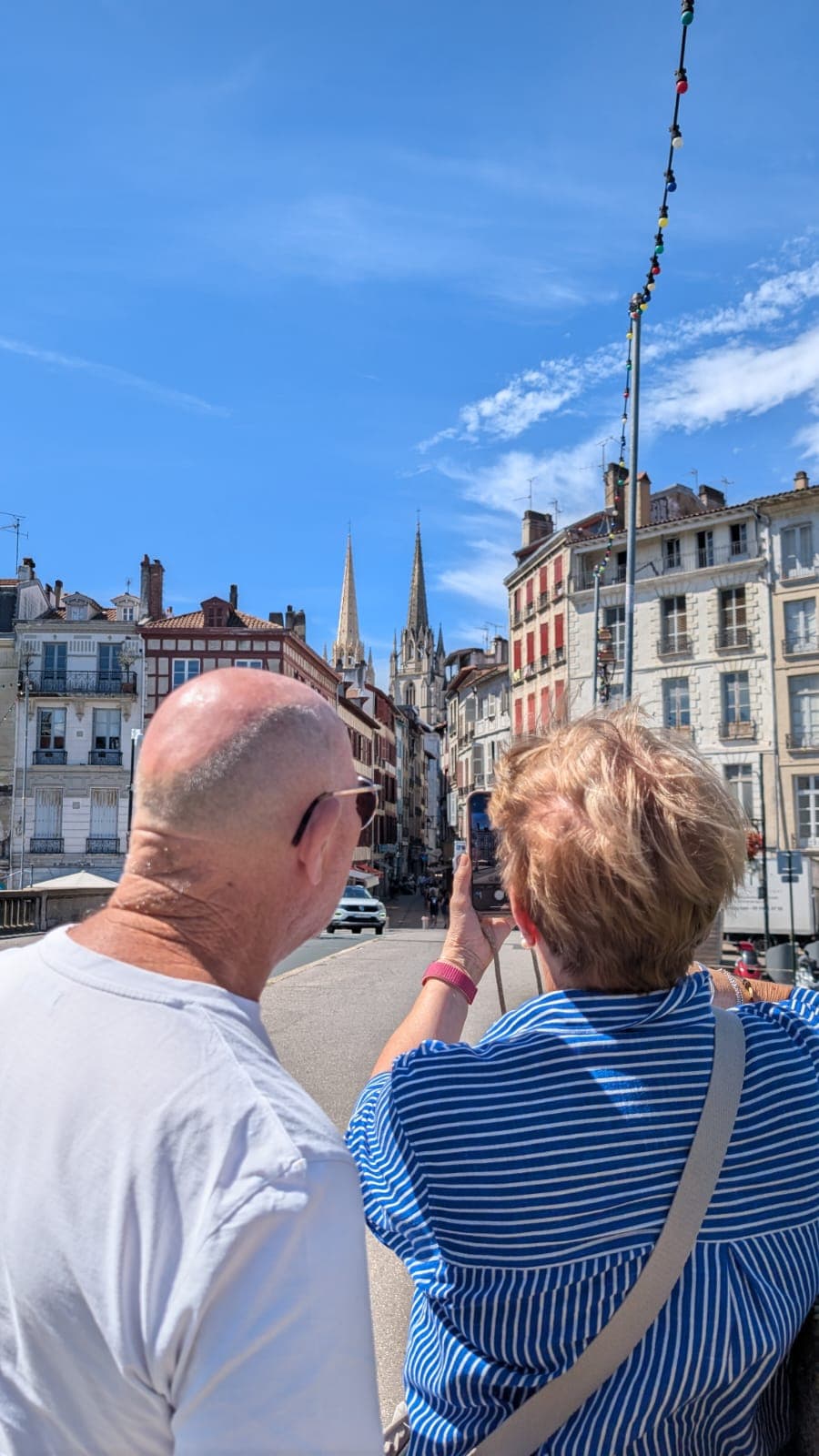
Construction began around 1213, after a fire destroyed the earlier Romanesque building. The architects drew inspiration from the cathedrals of Champagne and Burgundy to raise a luminous, soaring vessel of stone. The work continued for generations, each century adding its own style: the choir is in the purest Rayonnant Gothic, the nave is Flamboyant Gothic, and the spires, rebuilt in the 19th century by the architect Boeswillwald, rise 85 meters above the city.
Renaissance Stained Glass and the Sanctuary Knocker
The cloister of Bayonne Cathedral is one of the largest and best-preserved in France. Its Gothic galleries, built in the 13th and 14th centuries, surround a peaceful garden where time seems to stand still. The ribbed vaults, sculpted columns, and pointed arch openings form an ensemble of rare elegance. The cloister long served as a burial ground for the canons and notables of the city, and ancient tombstones are still visible in the floor.
On the Way of Saint James
What makes the Bayonne cloister particularly fascinating are its sculpted details. The vault keystones depict biblical scenes, fantastical animals, and expressive faces that testify to the imagination and skill of medieval sculptors. The column capitals are adorned with foliage, human figures, and mythological creatures. Taking the time to look up and observe these details is like traveling into the imagination of the Middle Ages.
The cathedral's stained-glass windows are a treasure often overlooked by hurried visitors. The oldest date from the 16th century and depict scenes from the life of the Virgin and the saints in colors of astonishing vibrancy despite the centuries. The light filtering through these windows colors the blonde stone of the nave with reflections of blue, red, and gold, creating an atmosphere of beauty and contemplation that alone justifies the visit.
The sanctuary knocker, on the south flank of the cathedral, is linked to a fascinating medieval tradition: the right of asylum. In the Middle Ages, any fugitive who managed to grasp this knocker benefited from the protection of the Church and could not be arrested. This right of asylum, taken very seriously in medieval Bayonne, speaks to the considerable power of the Church and the role of the cathedral as a place of refuge and justice in the society of the time.
Bayonne Cathedral is a major stopping point on the Way of Saint James. Since the Middle Ages, thousands of pilgrims have paused here before crossing the Pyrenees via the Roncevaux Pass into Spain. This tradition continues today, and you will often encounter hikers in the cathedral, walking stick in hand, having their credencial stamped. The cathedral still holds several objects connected to the pilgrimage, including a statue of Saint James dressed in pilgrim's garb.
On our guided tours of Bayonne with Amalur Tours, the cathedral is naturally an essential stop. We help you discover details that most visitors miss: the sculpted vault keystones, medieval inscriptions, and the traces left by the centuries in the stone. It is one of the highlights of the tour, a moment of calm and beauty in the heart of the city, where you truly grasp the historical depth of Bayonne.