Why the Basque Country Is a Gastronomic Paradise
The Basque Country has the highest concentration of Michelin stars in the world per capita. This is no accident. Basque gastronomy benefits from an exceptional terroir: the Atlantic Ocean for fish and seafood, the Pyrenean mountains for cheese and lamb, fertile valleys for vegetables and fruit, and a mild climate that supports diverse agriculture. Add to that a deeply rooted culinary culture where cooking is not a chore but an art of living.
Axoa, Ttoro, and the Dishes You Absolutely Must Try
The txoko, traditional gastronomic societies — historically all-male — where friends gather to cook together, perfectly illustrate this culinary passion. Hundreds of them exist across the Basque Country, each with its own equipped kitchen, secret recipes, and rituals. Members do their own cooking, in a spirit of sharing and conviviality. It is in these txoko that the most authentic recipes of Basque cuisine are passed down, from generation to generation.
The Real Gateau Basque: Cream or Black Cherry?
The axoa from Espelette is one of the most typical yet least-known dishes in Basque cuisine. This stew of minced or thinly sliced veal, cooked with onions, peppers, and Espelette pepper, is a concentrated burst of local flavors. Served with rice or potatoes, it is the quintessential Sunday meal in Basque families. Every cook has their own version, each one unique, and it is in the village inns that you will taste it in its most authentic form.
Ossau-Iraty Cheese and the Tradition of Transhumance
Ttoro, the fish soup from Saint-Jean-de-Luz, is another treasure of Basque cuisine. Unlike the Marseille bouillabaisse, ttoro uses Atlantic fish — hake, monkfish, conger eel, langoustines — simmered in a broth seasoned with Espelette pepper. Originally a fishermen's dish, prepared aboard boats with the day's catch, the best restaurants along the coast now offer refined versions that elevate this humble recipe to an art form.
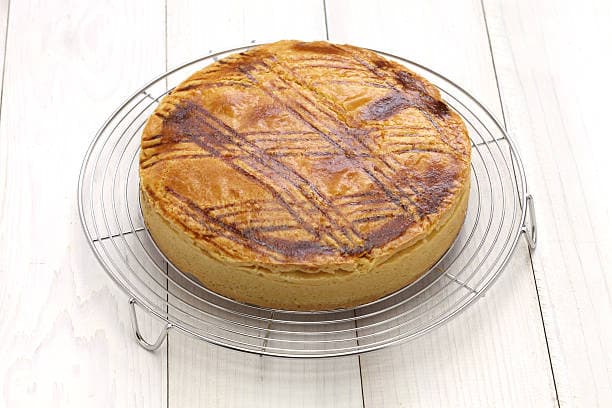
The gateau basque is arguably the most iconic dessert of the region, but few people know its history or its true recipe. Born in Cambo-les-Bains in the 18th century, the original gateau basque was filled with Itxassou black cherry jam. The pastry cream version came later. Today, the debate rages on: cream or cherry? Purists defend the black cherry as the only authentic filling, while the majority of Basques actually prefer the cream.
A good gateau basque is recognized by its golden, crispy crust, the richness of its shortbread pastry flavored with rum and vanilla, and the generosity of its filling. It should be soft inside and crunchy outside. Beware of the industrial versions sold in supermarkets: the real gateau basque is found in the artisan bakeries of the villages, where it is still made fresh every morning according to recipes handed down from mother to daughter.
Ossau-Iraty is the only French sheep's cheese to hold a Protected Designation of Origin (AOP). Made in the mountains of the Basque Country and Bearn, it is produced from the milk of local breeds — the red-faced Manech and the black-faced Manech — raised outdoors. In spring, shepherds still practice transhumance, leading their flocks to the high mountain pastures where the fragrant grass gives the cheese its incomparable flavors.
The traditional tasting of Ossau-Iraty is a ritual in itself. It is served with Itxassou black cherry jam — this sweet-and-savory pairing is a unique taste experience that surprises and delights. Accompanied by a glass of Irouleguy, the red wine from the Basque vineyards, or a local apple cider, Ossau-Iraty encapsulates the richness of the Basque terroir in a single cheese. It tells the story of the shepherds, the mountains, and a thousand-year-old savoir-faire.